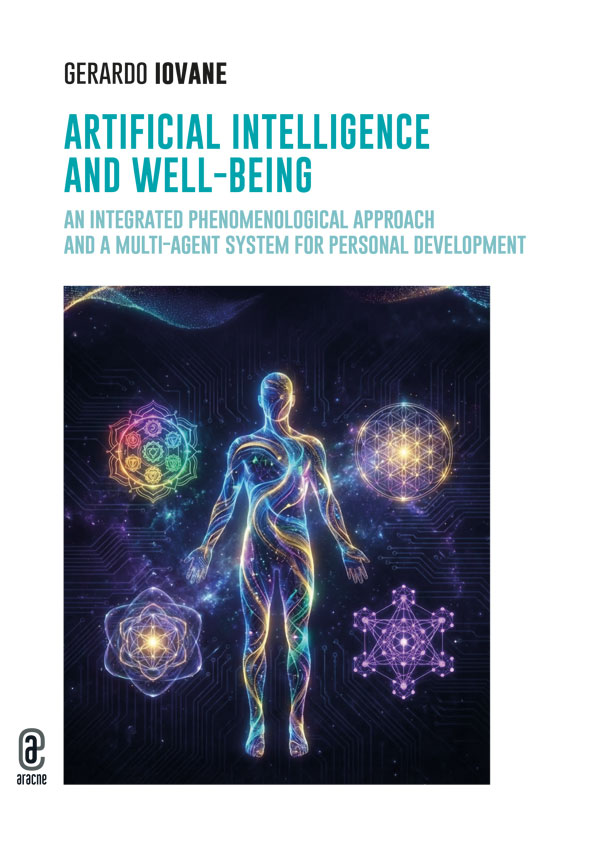
Well-being is not merely a physiological fact. It is the result of what can be measured, of what experience renders plausible, of what an archetypal pattern renders credible, and of what remains simply possible—and it is precisely in this that it eludes, far more than is supposed, the systems that currently assess it probabilistically. This volume proposes a paradigm for computational wellness based on four complementary epistemic distributions—Probability, Plausibility, Credibility, Possibility—and their synthesis into a unified measure, Occurrence. Organized into seventeen chapters, the text progresses from epistemological positioning toward implementation: the formal framework of uncertainty, the mapping of Reiki, Cosmoenergy, Teos Numerology, and Transerfing onto the four distributions, the architecture of the Wellness Evo-MAS multi-agent system powered by Large Language Models, the unified ontology of the subtle energy plane, the adaptive personalization engine, the six agents in detail regarding their calculations, all the way to application scenarios, the clinical validation protocol, and ethical considerations. The central thesis is one of super-additivity rather than syncretism: four independent perspectives, operating with incommensurable means, capture distinct dimensions of the same human being, and their formal integration produces more than the sum of the parts. In each chapter, the book specifies which statements are documented, which are argued, and which are merely proposed, indicating the ways in which its thesis can be falsified. Understanding how a decision is made under conditions of uncertainty—truly, in its formal detail—is today a skill that concerns human well-being as much as the science of computation.